You could spend a week building a first-time Paris itinerary and still arrive unsure it'll hold up. There's always another bridge, another pastry, another "you have to see this" — and no way to know, from a screen, which of it actually works with a six-year-old and a hotel on the other side of the river.
Here's a real three-day shape, built the way we build a custom edit: one anchor a day, kept inside one or two neighbouring areas, with a skip-list and a rainy-day swap attached. The aim isn't to see more. It's to bank the day's one big moment early, then let the afternoon go soft — which is exactly when Paris becomes the trip your child actually remembers.
Why one anchor a day beats a full checklist
The mistake on a first trip isn't choosing the wrong sights. It's stacking too many. Children can hold focus in a museum for roughly half an hour before they start to drift, and every extra métro change, queue and ticket line adds to the load even when each one is small. Do the Louvre and Orsay and the Eiffel in a day and the day breaks — usually around 3pm, usually in a transition.
So each day below follows the same heartbeat: one still thing (the climb, the cruise, the sit-down lunch), wrapped in release (running, discovering, choosing), with a reset at the switch between them. And here's the freeing part, especially under age seven: children remember the gelato, the carousel and the pigeon they chased far more than the monument's name. The famous thing is the photo. The afternoon with nowhere to be is the memory.
The three days
The Eiffel Tower, the Seine & the Tuileries
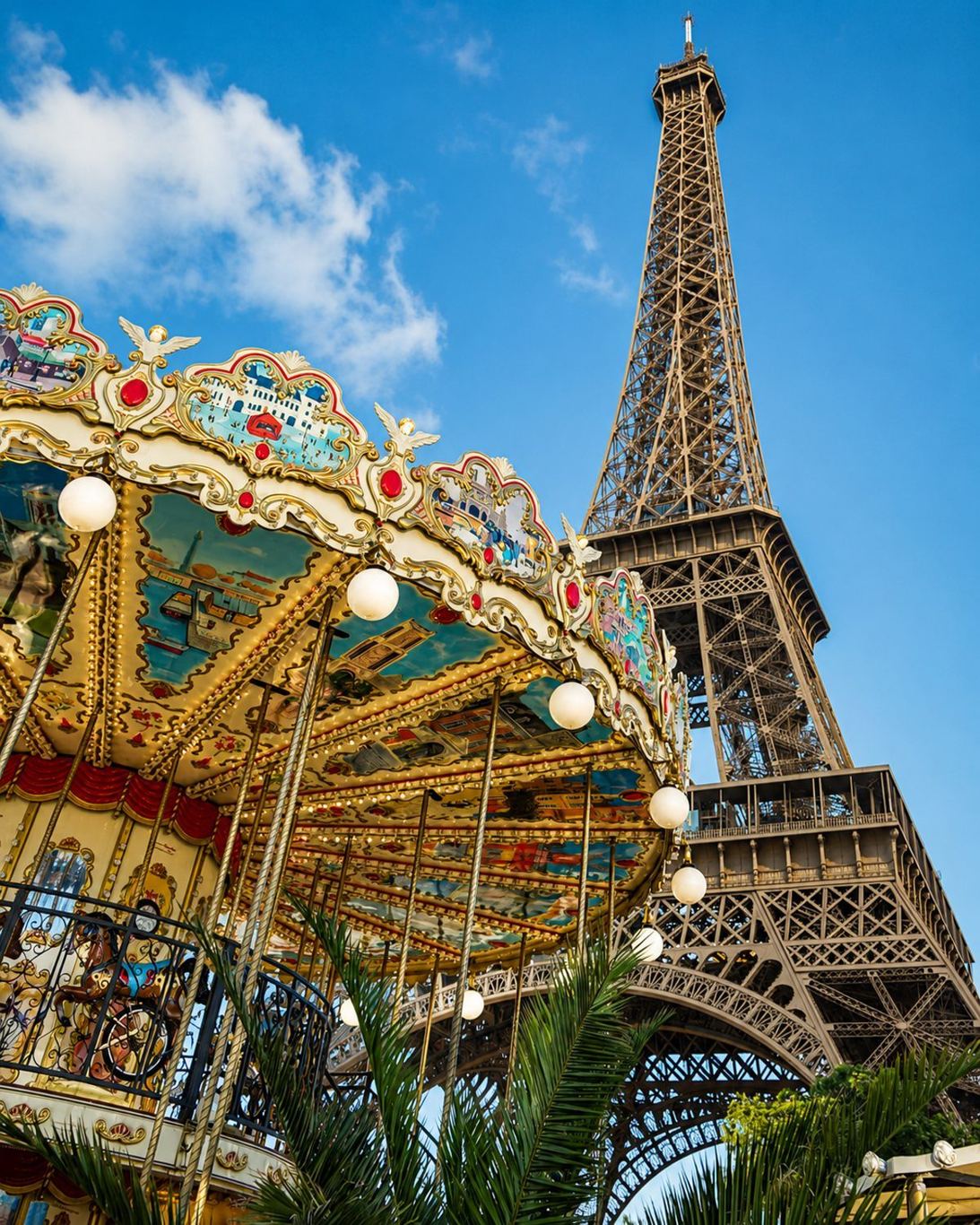
Anchor — A morning around the Champ de Mars, with the Eiffel Tower right there: lawns to run, playgrounds, the carousel, and the tower itself for photos. Go up only if you've pre-booked and the queue is short; otherwise the view from the grass is the memory, minus the two-hour wait.
Carry as options — A short Seine stretch afterwards — count the bridges, watch the boats, or take a sightseeing cruise for a sit-down with the monuments sliding past. Then the Jardin des Tuileries in the afternoon for the carousel, open space and seasonal pond boats.
Eat — A picnic or a casual lunch in the 7th; a café for the bathroom-and-snack reset before the Tuileries.
Notre-Dame, the islands & the Marais
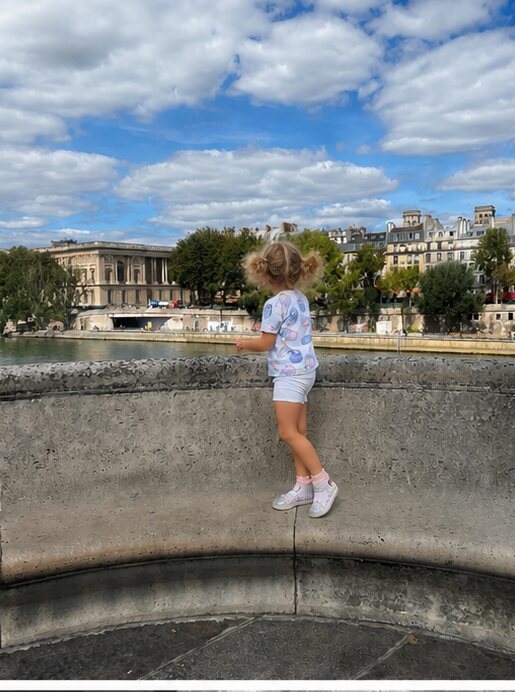
Anchor — A slow loop around the Île de la Cité — Pont Neuf, the little Square du Vert-Galant, the outside of Notre-Dame — then across to Île Saint-Louis for an ice cream and a riverside pause, and into the Marais for lunch. Compact, scenic, and almost all on foot.
Carry as options — Place des Vosges to run and snack in the middle of the afternoon; and one small museum only if the day has room — the Musée de la Chasse et de la Nature (animals at child height) or the Musée Carnavalet (the story of Paris, free, easy to leave after thirty minutes).
Eat — Falafel or a bakery on rue des Rosiers, ice cream on Île Saint-Louis, or a hot chocolate under the Place des Vosges arcades.
Montmartre & a park afternoon
Anchor — A short Montmartre morning from Abbesses: take the funicular up to Sacré-Cœur rather than the staircase, catch the terrace view, then wander the quieter vineyard side streets and the "Mur des Je t'aime." Keep it short and structured — Montmartre is steep.
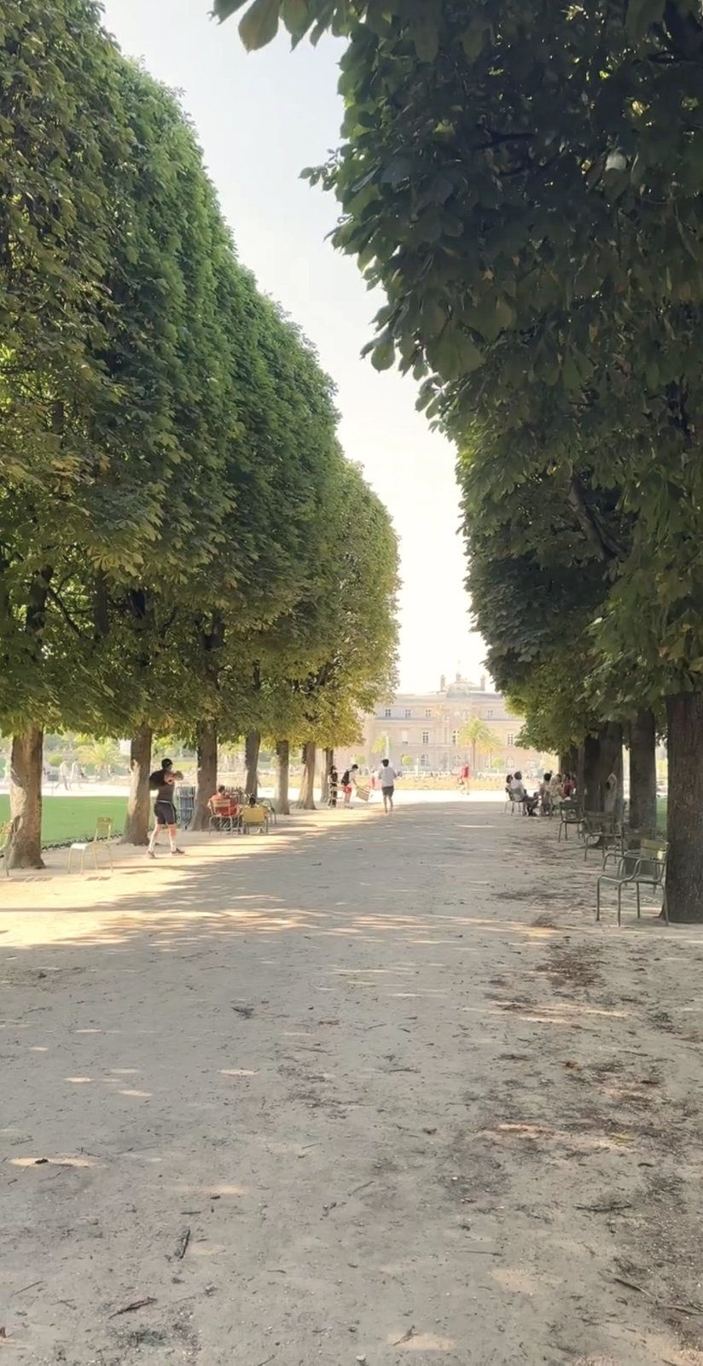
Carry as options — One park in the afternoon: the Jardin du Luxembourg for a classic Paris garden (sailboats, carousel, playground), or Parc de la Villette with the Cité des Enfants for children who need active, hands-on play. Pick one, not both.
Eat — Lunch in Montmartre away from the busiest square; an easy dinner near your hotel, in the Latin Quarter or Saint-Germain.
The day's rhythm at a glance — tap to open
A rough shape only — in practice the only fixed points are meals, naps and the 4–4:30 goûter. Use this if you like a skeleton, then let the afternoons flex to your child.
Day 1
Morning: Eiffel / Champ de Mars (tower only if pre-booked) · Midday: short Seine stretch or cruise · Lunch 12:15–12:30 in the 7th · Afternoon: Jardin des Tuileries · Goûter 4–4:30 · Optional: Palais-Royal or the Louvre courtyard, then an early dinner at opening (~7pm).
Day 2
Morning: Île de la Cité — Pont Neuf, Vert-Galant, Notre-Dame exterior · Île Saint-Louis for ice cream · Lunch 12:15–12:30 in the Marais · Afternoon: Place des Vosges and unstructured time · Goûter 4–4:30 · Early dinner in the Marais.
Day 3
Morning: Montmartre — Abbesses, funicular, Sacré-Cœur, quiet streets · Lunch 12:15–12:30 away from the busiest square · Afternoon: Jardin du Luxembourg or Parc de la Villette + Cité des Enfants · Goûter 4–4:30 · Easy dinner near the hotel.
Best photo spots, low stress tap to open
The most reliable iconic shots are also the ones with room for children to move, instead of standing still in a crush:
- The Eiffel Tower — from Trocadéro or across the Champ de Mars lawns.
- The Louvre courtyard — the pyramid from outside, no ticket, no queue.
- Place des Vosges — the arcades and the garden, calm and symmetrical.
- Île Saint-Louis — the quiet quays and riverbanks, ice cream in hand.
- Montmartre — the Sacré-Cœur terrace and the quieter side streets away from the densest corners.
Places to avoid or de-prioritise tap to open
- The Louvre — do it from outside. For families (especially under ~7), the courtyard and glass pyramid are the lovely, free, no-queue way to "do" the Louvre, with the Tuileries gardens right next door to run. Save the interior for a future trip — below about seven the galleries rarely land and won't be the part they remember. If you do go in, keep it to one short, targeted visit, never the same day as the Eiffel.
- Both the Louvre and the Musée d'Orsay. On a three-day first visit, pick one great gallery, not two.
- Versailles or Disneyland. Wonderful, but each eats a whole day — they belong on a longer trip, not a packed first three days.
- The Champs-Élysées. Long walks and little for young children; gardens, boats and neighbourhood wandering win every time.
The reset games (and the memory)
Across three full days, your most useful tools are portable ones: our three little reset games. Silly shakes to burn off energy before a still stop; the walk-like game (fox, fairy, giant) to carry tired legs between sights; and the five-senses pause — I Spy with ears, nose and fingertips, plus taste at the snack — to settle an over-full child. Reach for the right one at the transition (off the métro, out of the museum) and you bridge the moment instead of fighting it.
It's also what makes the trip stick. At dinner, one question does the work: "If today was a chapter in a book, what would you call it?" Three days, three titles your child chose — that's the trip they'll retell.
Practical tips tap to open
- The only things on the clock: meals, naps and the goûter. Sit down to lunch by 12:15–12:30 to beat the crowd; protect the nap or quiet hour; keep a goûter (snack) at 4–4:30 to bridge the long stretch to dinner; and if you eat out at night, arrive at opening (~7pm) — a bouillon with non-stop service is the easy early option. Everything else runs on the order of the day, not the hour.
- Getting around. Keep each day geographically tight. Pick the faster route and go down with a plan — line, direction, number of stops; the métro is usually quickest, and Parisians help with the stroller on the stairs. The scenic riverside bus 72 is a nice step-free alternative along the Seine on Day 1. Download the RATP app for closures and keep a carrier for the worst staircases.
- Closed days. Most museums close Monday or Tuesday — Louvre and the Grande Galerie de l'Évolution on Tuesdays, Orsay on Mondays, the Orangerie open Mondays. Build each day around the right closure.
- Bathrooms & snacks. Café stops are the most reliable bathroom network; carry a snack for the pre-lunch gap, when most meltdowns actually start.
- Confirm before you go. Check current hours and closed days close to the trip, and book timed entries ahead where they apply — Orsay now requires timed entry, and the Cité des Enfants runs timed sessions.
Look at how much of a working itinerary is invisible: the closed days, the métro changes, the food timing, the bathroom you can find, the rain swap. The sights are the easy part. Sequencing them so the day doesn't collapse — across three days, with a tired child — is the work most families underestimate, and the reason a vetted day is worth more than another list.
Keep exploring
This is a frame, not a script. Fill it in with our other guides — a morning in the Jardin du Luxembourg for a park afternoon, a short museum visit, and a rainy-day plan for your back pocket.

Want this done for you?
Or hand the whole thing over: we build edited, vetted Paris days around your family — your child's age, your hotel, your dates and the weather — with the backups already in place. Start with our free sample, The Sailboat & Left Bank Day, to see exactly what that looks like.
See the free Sample Edit