It's raining, the children are looking at you, and the plan you built is dissolving on the other side of the window. The instinct is to scramble — to rescue the whole day. Don't. A rainy day in Paris doesn't need the original itinerary saved. It needs one good indoor anchor and a backup, chosen before you're cold and improvising.
Below are real indoor picks, sorted by your child's energy rather than by fame — the kind of shortlist we'd hand you so you're not researching with a wet phone.
- Cité des Sciences — La Villette, 19th · energy to burn
- Natural History Museum — Jardin des Plantes, 5th · animals & awe
- Indoor bouldering — Batignolles · Bercy · Montmartre · climb it out
- Musée des Arts Forains — Bercy, 12th · ride the antique carousels
- Aquarium de Paris (Cinéaqua) — Trocadéro, 16th · sea life under cover
- Grandes Serres (the great glasshouses) — Jardin des Plantes, 5th · a warm green escape
- Philharmonie de Paris — La Villette, 19th · music made for small ears
- Musée en Herbe — Les Halles, 1st · made for small hands
- Musée de l'Orangerie — Tuileries, 1st · a short, central hour
- Palais Galliera — 16th · for a child who loves to dress up
The one rule for a rainy day
A good rainy day moves in a quiet heartbeat — still, release, reset. Keep food timing steady, reduce walking, and choose one indoor anchor plus one warm pause. Three big indoor stops in the rain is how the day actually goes wrong. You're protecting the rhythm so the day still feels possible — and you're keeping a little reset kit on hand for the moment a child needs to shake the wet-day fidgets loose.
Pick your anchor by energy
Energy to burn → the Cité des Sciences (La Villette, 19th). The Cité des Sciences et de l'Industrie is the big rainy-day anchor in the north of the city — and it's far more than its famous children's rooms. Even if you haven't booked a thing, you can easily fill four hours here. Métro Porte de la Villette (M7).
How the Cité des Enfants actually works. Inside the Cité des Sciences are two ticketed, hands-on play worlds — the Cité des Enfants 2–6 and the 5–10 — run as timed sessions of about 90 minutes that do sell out, so reserve those ahead if they're your main event. The 2–6 space reopened in June 2026 after renovation. But the building around them is full of open-access exhibitions, plus a planetarium and the Argonaute submarine moored outside to explore — more than enough to fill a half-day on a simple walk-up ticket. So book a Cité des Enfants slot if you can; just know the day still works if you can't. Check current sessions, ages and prices at cite-sciences.fr.

Climb it out → indoor bouldering. When the rain has trapped a child who simply needs to move, an indoor bouldering gym is a rainy-day secret weapon — low walls, thick crash mats, no ropes, and most have a dedicated kids' area, so it works as a family. Three that suit children around the city: Climbing District Paris 17 in Batignolles, right by Parc Martin Luther King (children's climbing from around age 4); Le Triangle in Bercy Village, which has a dedicated children's area; and Arkose Montmartre in the 18th, near Montmartre, with a kids' space for roughly ages 3–12. Bring socks and stretchy clothes — and check session times, minimum ages and whether you need to book before you go, as supervised children's sessions can sell out.
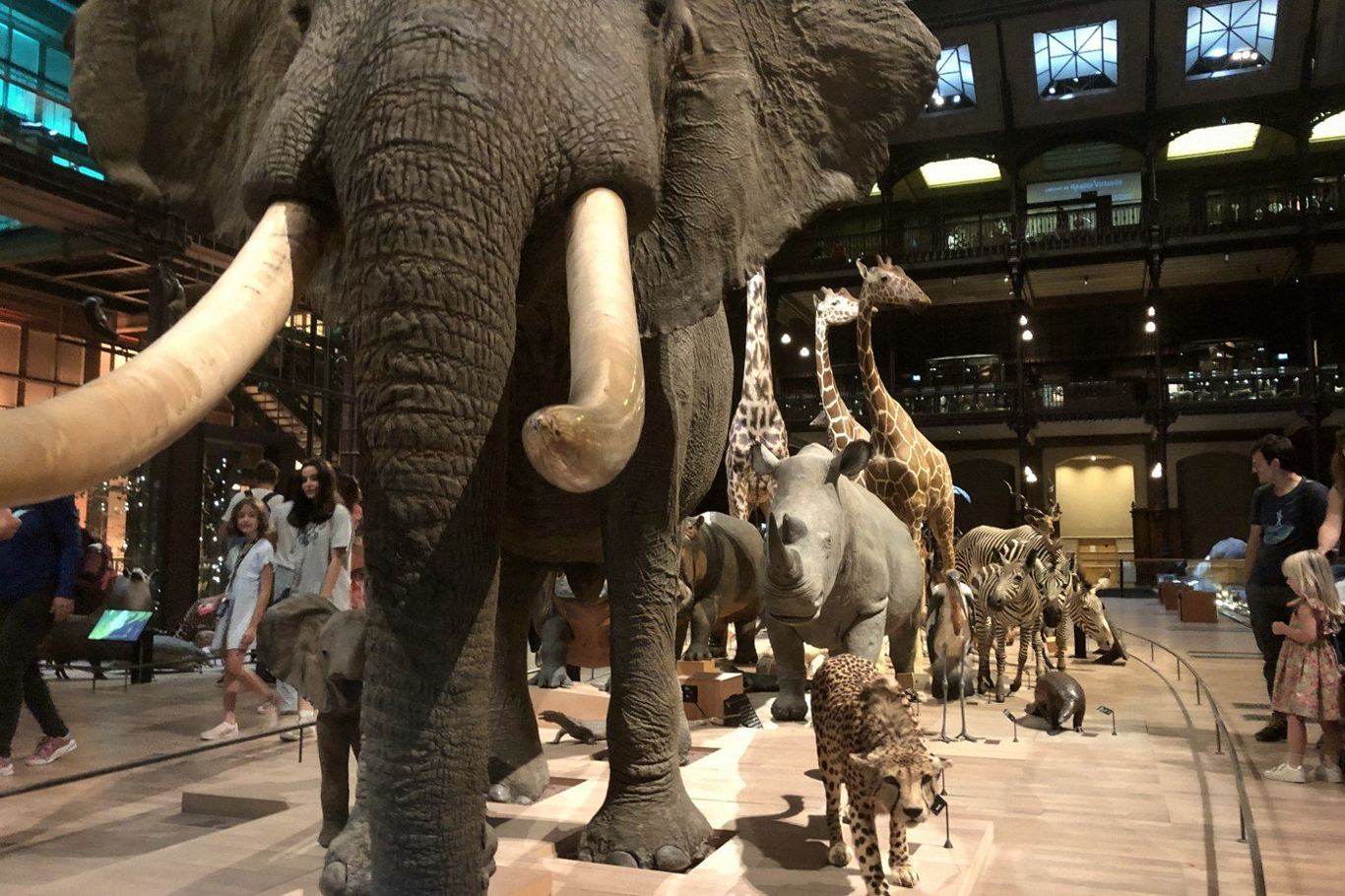
Animals and awe → the Natural History Museum. The Grande Galerie de l'Évolution at the Jardin des Plantes (5th; métro Censier-Daubenton, M7) is a soaring hall of taxidermy animals in procession — genuinely awe-inducing for children, and one of the best rainy-day anchors in Paris. A separate hands-on Galerie des Enfants (ages 6–12) runs as a timed ticket.
Curious but calmer → something small and strange. The Musée de la Chasse et de la Nature (62 rue des Archives, Marais; métro Rambuteau, M11) is full of animals at child height and feels like a curious old mansion. Under-18s free, often a children's activity on Wednesdays.
A short, central hour → the Musée de l'Orangerie. If the rain is on-and-off rather than set in for the day, the Musée de l'Orangerie (Tuileries; métro Concorde) is the perfect one-hour museum — Monet's Water Lilies, a small children's section, and the Tuileries garden right outside to carry on the adventure the moment it clears. Useful on a Monday, when many museums are shut — the Orangerie closes Tuesdays instead. Under-18s free.
Beauty with an easy exit → a short, free culture stop. The Musée Carnavalet (rue de Sévigné, Marais; métro Saint-Paul, M1) tells the story of Paris, its permanent collection is free, and you can dip in for half an hour and leave.
Music made for small ears → the Philharmonie de Paris. The Philharmonie de Paris (Parc de la Villette, 19th; métro Porte de Pantin, M5) is a wonderful wet-day surprise for families. Alongside its Musée de la musique — a hall of instruments to discover — it runs a packed calendar of concerts, workshops and hands-on activities built for young children, with a dedicated space aimed at roughly ages 4–10. The programme changes constantly, so the real move is to open the calendar and plan the day around what's on. Check the family events, ages, opening days and prices for your dates before you go.
For a child who loves to dress up → the Palais Galliera. Paris's fashion museum (Palais Galliera; métro Iéna, M9) fills its rooms with gowns and costumes — a little one who loves dressing up will be wide-eyed. Bring a few coloured pencils and a small pad so she can sketch her own versions of the dresses as you go; it turns looking into making, and buys you another quiet half-hour. One caveat: Galliera runs on temporary exhibitions and can close between them, so check there's a show on, and its opening days, before you build the day around it.
Made for small hands → the Musée en Herbe. A children's museum in the very centre, near Les Halles and the Louvre (23 rue de l'Arbre-Sec, 1st), built entirely around exhibition-games and creative workshops on artistic, scientific and civic themes — the layout is designed so children learn while they play. There's a year-round programme of exhibitions and workshops; reserve ahead at musee-en-herbe.com.
Sea life under cover → the Aquarium de Paris (Cinéaqua). In the Trocadéro gardens (métro Trocadéro, M6/M9), the Aquarium de Paris — Cinéaqua holds Europe's largest collection of jellyfish — quietly mesmerising on a grey afternoon, with sharks and a kids' programme too.
A warm green escape → the Grandes Serres (the great glasshouses). The great glasshouses of the Jardin des Plantes shelter you in a world where the plants rule: four hothouses — tropical rainforest, desert, the landscapes of New Caledonia, and a fourth tracing the history of plants — a world tour without leaving the 5th. They sit in the same garden as the Natural History Museum, so you can pair the two. One caveat: they're kept warm and humid by design, so save them for a cold, wet day — not a hot one.
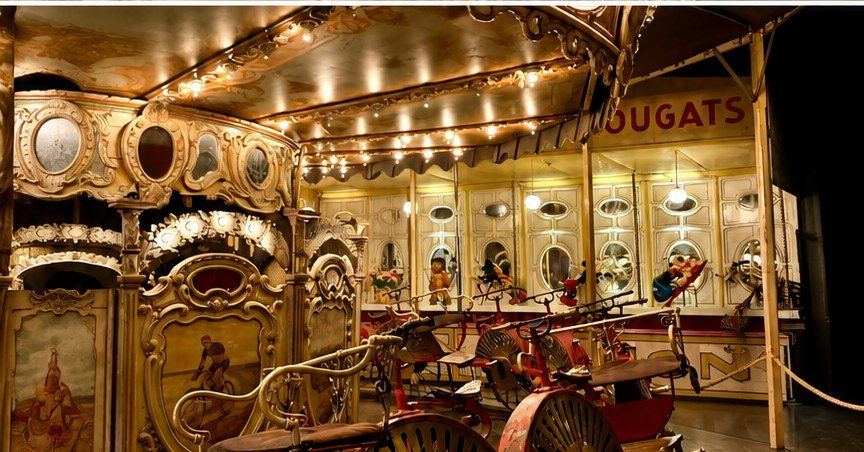
Pure wonder → the Musée des Arts Forains. In the old wine warehouses of Bercy (53 avenue des Terroirs de France, 12th), this private museum of antique fairground rides and carousels is magic on a wet day — you don't just look, you ride: hundred-year-old attractions, including an 1897 bicycle merry-go-round the riders power themselves. Visits are a guided 90 minutes and need advance booking (arts-forains.com); tours run mainly on Wednesdays, weekends and during French school holidays, mostly in French with an English handout (English tours in summer). Recommended from about age 5; under-4s free. One note: cobbled floors link the rooms, so it's not stroller- or wheelchair-friendly between spaces.
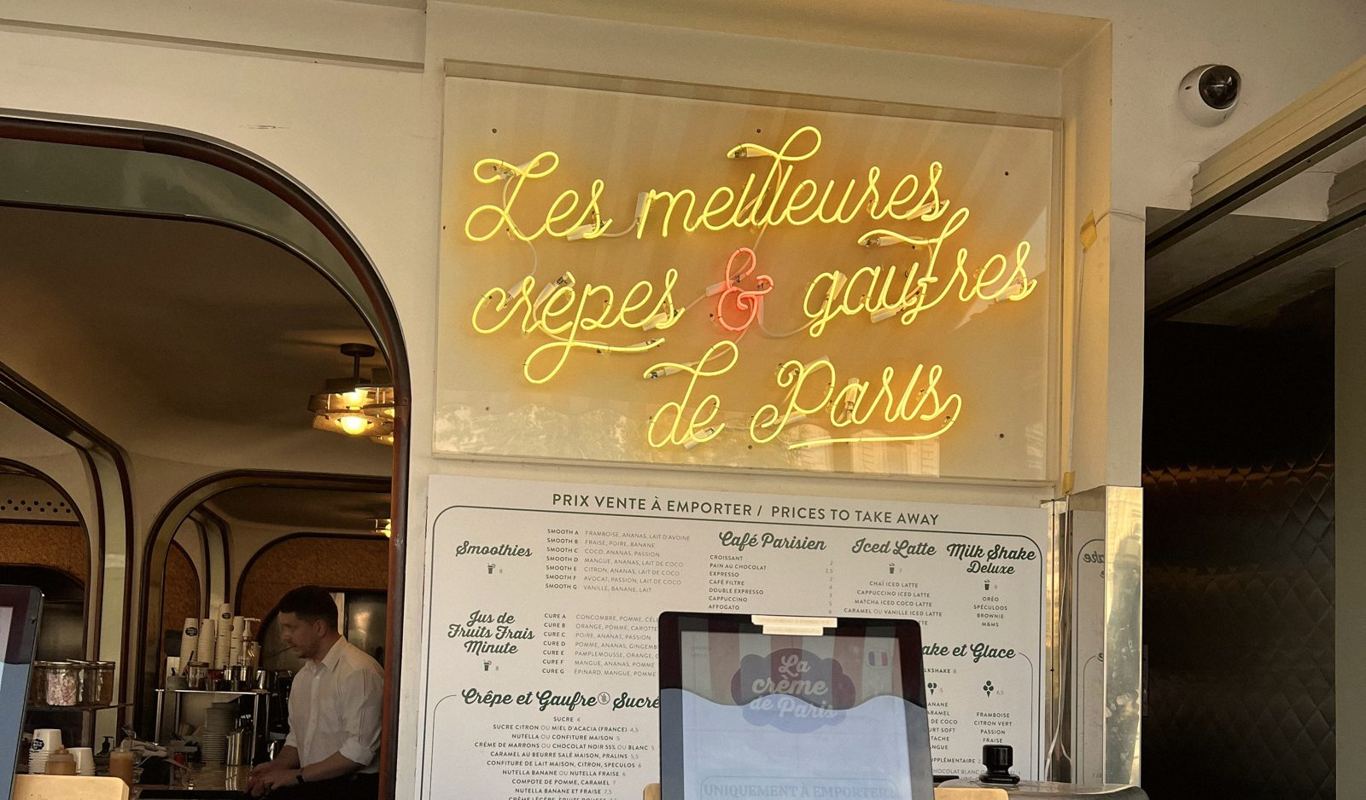
Can't decide → get warm first. Duck into a continuous-service café, dry off, and choose from there. "One dry hour" is a complete plan, not a defeat.
The five-senses pause (rain makes it easy)
A rainy day is the perfect setting for a five-senses pause — I Spy, but with ears, nose, and fingertips. Rain hands you the prompts for free:
- "What sound does the rain make on this roof, this glass, this courtyard?"
- "What can you smell now that the street is wet?"
- "Find the coziest, warmest thing you can touch."
Run it whenever the day wobbles — especially in the transitions, stepping back out into the wet, which is where indoor days usually come apart. Add the taste sense when the hot chocolate arrives and the reset and the treat become one moment. Hand your child the job of "rain photographer" — one reflection, one umbrella, one indoor detail — and the grey becomes something they're collecting rather than enduring.
Three little reset games
A rainy day bottles up energy with nowhere to run, so keep a small reset kit on hand — three games we fold into every day:
- Silly shakes. Shake it all out, head to toe, then freeze — a fast way to discharge the fidgets before you ask a child to be quiet in a museum.
- The walk-like game. Move to the next room walking like a cat, a giant, a robot — turning a dull transit corridor into the fun part.
- The five-senses pause. The quiet one above, for when a child needs to settle rather than burn off steam.
The full set is here.
Practical tips
- Timing. Rainy days pack the famous indoor spots; go early or late and expect queues.
- Closed days. Most Paris museums close Monday or Tuesday — the Louvre and the Grande Galerie de l'Évolution on Tuesdays; Carnavalet, the Chasse and most City of Paris museums on Mondays; the Orangerie on Tuesdays. Check before you set out — the rainy day you planned to "save indoors" can be the one the museum is shut.
- Eating out. The independent restaurants worth seeking out are most often closed Sunday–Monday or Monday–Tuesday. On those days, lean on a bakery, a brasserie, or a bigger-name spot rather than counting on a small local favourite.
- Booking. Hands-on spaces like the Cité des Enfants run timed sessions and sell out — book ahead. Some workshops need separate reservations.
- Food. Keep it warm and flexible: a continuous-service café to duck into, a bakery, or a snack in your bag beats a rigid lunch on a wet day.
- Breaks. A hot-chocolate stop isn't killing time — on a rainy day it's part of the structure.
- Cloakrooms & strollers. Confirm where to leave wet coats, and stroller rules, on arrival.
- Transit. Keep transfers short; crossing the city in the rain undoes the warmth you're building.
A rainy day is the clearest example of why an edited day earns its keep: the right indoor anchor depends on weather, energy, the closed day, the booking window, and how far you're willing to travel wet — five moving parts, decided in a panic, usually badly. Decided in advance, the rain becomes a change of plan instead of a lost day.
Keep exploring
A rainy-day plan is the companion to a sunny one. Browse our other guides — a short, low-stress approach to Paris museums, the introduction to easy days with kids, and the three-day itinerary, which keeps a rain swap attached to every day.

Want this done for you?
Every Paris day we build comes with a rainy-day swap already in place — so the weather is never the thing that decides your trip. See how it works in our free sample, The Sailboat & Left Bank Day.
See the free Sample Edit