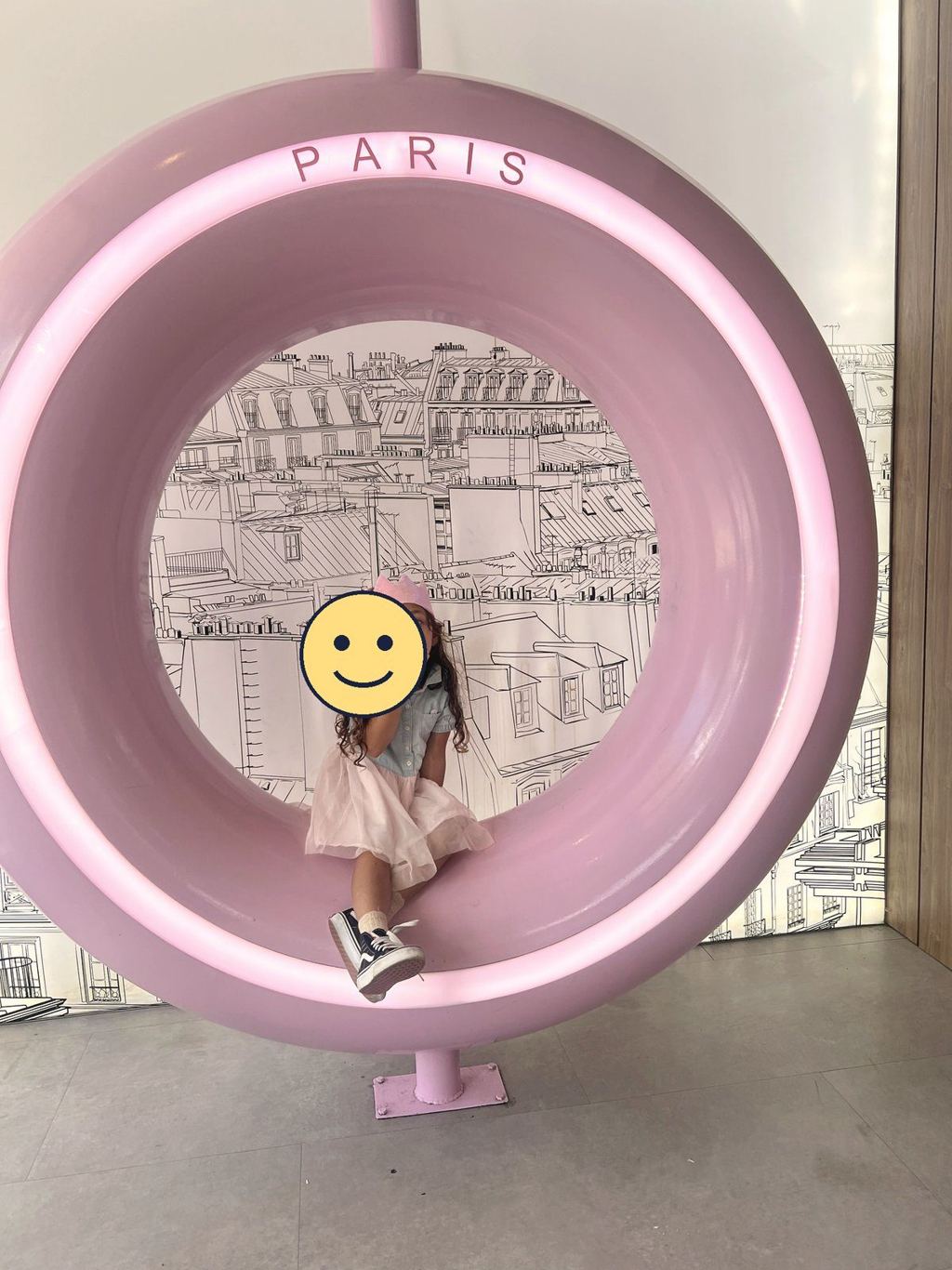
Five is a wonderful age to bring to Paris and a hard one to plan for. Old enough to remember the trip; young enough to come apart in front of a masterpiece. The hours you'll lose aren't on the train — they're at the kitchen table beforehand, trying to figure out which famous thing is worth it and which will just exhaust everyone.
Here are three day-shapes, with real anchors, built the way we build an edit for this age: one or two anchors, plenty of slack, and a backup attached — so the day flexes instead of collapsing.
What usually fails at age five
If a Paris day with a five-year-old goes sideways, it's almost always one of these — and parents recognise themselves instantly:
- Long museum visits. Past about 45 minutes, a five-year-old is done, no matter how good the museum.
- Multiple métro changes. Each change — stairs, crowds, a stroller, "hold my hand" — spends energy you needed for the actual outing.
- Restaurants that require a 90-minute sit-down meal. A hungry five-year-old will not wait for the second course.
- No release valve. A day of looking and walking with nowhere to run ends in a meltdown around 4pm.
None of these is about choosing the wrong attraction. They're about pacing, transitions, and timing — the invisible stuff. Design around them and the same child who melts down on one plan sails through another.
Why this age suits story walks
A five-year-old moves constantly between the real world and the imagined one. A statue becomes a character, a gate a portal, a fountain something with opinions. That's why a short story-walk lands better than a string of ticketed attractions — they don't need a big spectacle, they need a reason to look and room to move.
The shape that works at five has a heartbeat: one still thing (a short museum, a puppet show, a meal), wrapped in lots of release (running, climbing, choosing the next turn), with a reset at every switch between the two. Notice that "how much" isn't fixed — the still thing stays one, but how much free time a five-year-old needs around it depends entirely on the day, the sleep, and the child. Plan generous release and you can always tighten it; plan a tight day and you can't loosen it.
Three day-shapes that work
The garden day → Jardin du Luxembourg (6th). Wooden sailboats to push across the Grand Bassin, the historic carousel, an enclosed playground, room to run, and a puppet show at the Théâtre des Marionnettes (Wed/Sat/Sun, and daily in school holidays). The most reliable day for this age. Closest station: RER B Luxembourg. Garden hours are seasonal and the puppet show runs around 40 minutes from roughly €2.70 — confirm the day's times before you promise it.
The neighbourhood story walk → the Marais (3rd/4th). A short loop of enormous doors, carved stone faces, and hidden courtyards, with Place des Vosges to rest and run in the middle. The architecture does the entertaining; add one tiny quest — "find three faces in the stone" — and it's a game. Métro Saint-Paul (M1).
The short museum day → Musée de la Chasse et de la Nature (62 rue des Archives). Animals at child height in a building that feels like a curious mansion, not a gallery. Under-18s free, kept under an hour, with a snack and a garden after — far easier than the Louvre at five. Open Tuesday to Sunday, roughly 11am–6pm, closed Monday.
Whichever you choose, carry one extra small idea and one backup, and use them only if the day asks for it.
The five-senses pause (and the memory)
When a five-year-old starts to fray — usually right after a still-stretch, or mid-transition — reach for a five-senses pause: I Spy, but with ears, nose, and fingers. "What can you hear right now? What can you smell? Find something rough to touch." Add the taste sense when you hand over the snack, and the reset and the goûter become one moment. Ninety seconds of this resets a child more reliably than a treat or a screen.
Five is also the perfect age for the other two games in our little reset kit: silly shakes (shake it all out, then freeze) to burn off a fizz of energy before a museum or a meal, and the walk-like game (walk like a fox, a fairy, a giant) to carry them along a dull stretch between stops without anyone digging in their heels.
The same noticing is how the day sticks. Hand your child the lens — a few openers they'll run with:
- "Which statue looks friendly, and which looks grumpy?"
- "If this fountain could talk, what would it say?"
- "Can you find a lion, a bird, or a horse before I do?"
And one mission: find and draw "the best story door" of the day — one that belongs to a giant, a witch, a queen, or a very small dragon.
Practical tips
- Timing. Mornings are best; do the anchor early and keep the afternoon soft. Build the day around nap or quiet time rather than against it.
- Walking & métro. Short distances, one or two neighbouring areas. Five-year-old legs run out — bring a stroller or carrier for the journey home even if they walk the rest. When you ride, pick the faster route and go down with a plan (line, direction, number of stops); the métro is usually quickest, and Parisians help with the stroller on the stairs.
- Food. A bakery, a continuous-service café, or a picnic on rue Mouffetard (5th) lets you eat when they're hungry rather than when a reservation says so. Carry a snack for the pre-lunch gap.
- Restaurant closed days. Independent restaurants are most often shut Sunday–Monday or Monday–Tuesday; on those days, lean on a bakery, brasserie or bigger-name spot.
- Breaks. Build in more pauses than feel necessary; sitting and watching is part of the day.
- Bathrooms. Go before leaving each stop; gardens, museums, and big stores are reliable.
- Attractions. Any puppet show, carousel, playground, or workshop has its own hours, fees, and age range — confirm before promising it to a five-year-old.
- Closed days. Aiming at a museum? The Louvre closes Tuesdays, most others Mondays.
The reason a five-year-old's day is so easy to get wrong is that the hard parts — nap timing, transitions, food before the crash, a bathroom you can find — are invisible until they go wrong. Getting them right in advance is most of the work.
Keep exploring
A five-year-old's Paris pairs well with our other guides — a short museum visit, a morning in the Jardin du Luxembourg, and a Marais story walk built around doors and hidden passages.

Want this done for you?
Want a day shaped precisely around your five-year-old — their pace, your hotel, the food timing that keeps them happy — and checked by someone who knows the city? That's what we make. Start with our free sample, The Sailboat & Left Bank Day, to see one in full.
See the free sample: The Sailboat & Left Bank Day