A bakery is not a detour on a Paris day with kids. It's the part they remember — the warm thing in the hand, the choosing, the first tear of a baguette on the walk. But not every place with baguettes in the window is good, and when you're choosing fast with a hungry child, you don't have ten minutes to read reviews. The good news: in Paris, the shopfront tells you almost everything, if you know what you're looking at.
The one word that's a promise: boulangerie
In France, the word boulangerie is protected by law. A shop can only call itself one if the bread is kneaded, shaped and baked on the premises. A place that buys in frozen dough and just bakes it off — or resells bread made elsewhere — isn't allowed to use the name; it's a dépôt de pain. So the sign over the door is already a signal: a true boulangerie made the bread it's selling you, right there.
Two more words to look for: artisan boulanger (a qualified baker working in the traditional way, not an industrial chain) and fait maison (made in-house). And on the baguettes themselves, ask for a baguette de tradition — made by law with just flour, water, salt and yeast, no additives or freezing. It's the one to hand a child to carry.
The stickers in the window worth trusting
Parisian bakers compete, hard — and they put the proof on the glass. A few are genuinely worth slowing down for:
- Grand Prix de la Baguette de la Ville de Paris. The city's annual baguette competition. The winner doesn't just get a plaque — they supply the Élysée Palace, the French president's residence, with baguettes for a year. Kids love that: the president eats this exact bread.
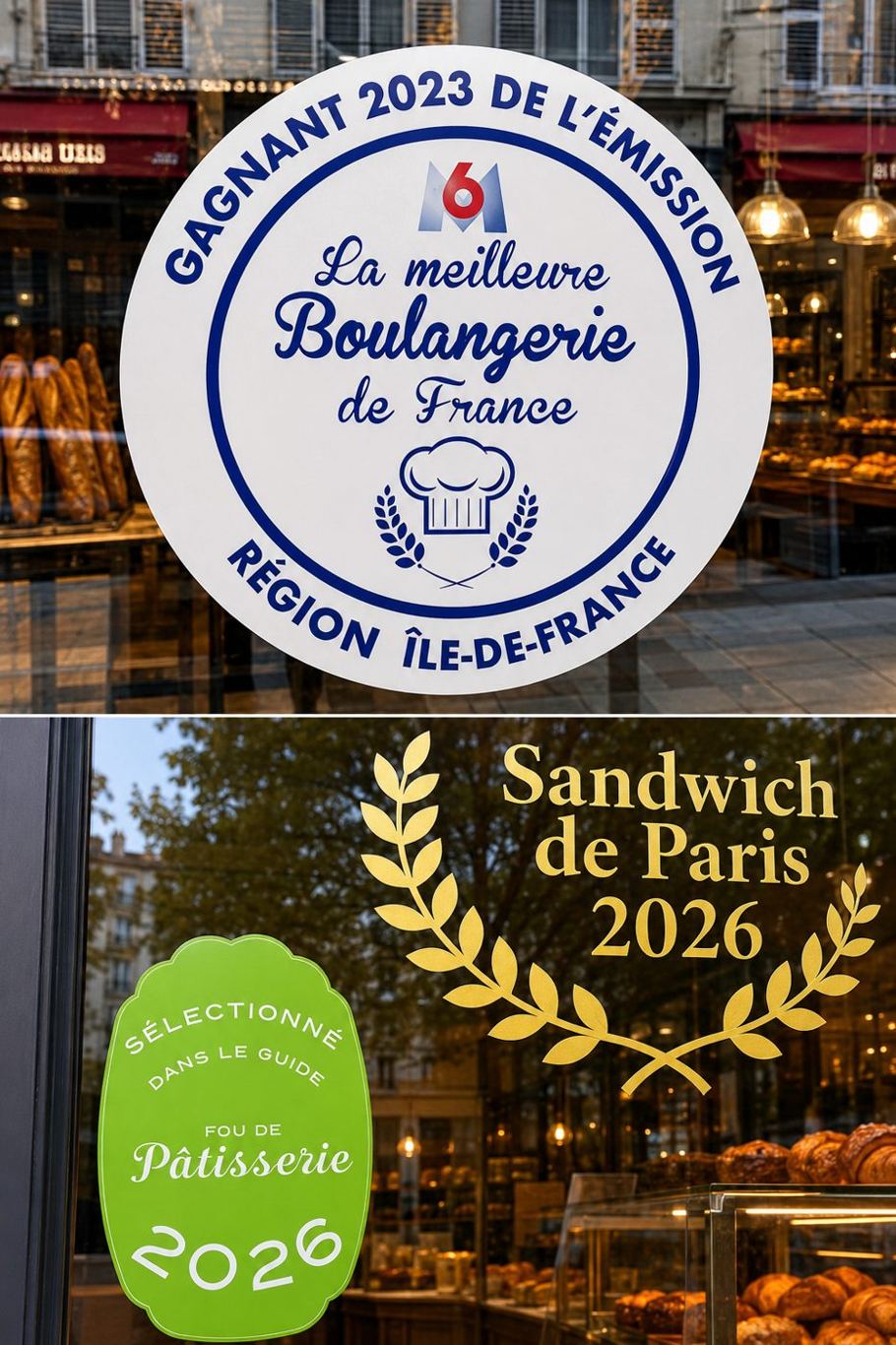
- La Meilleure Boulangerie de France. The M6 television contest where judges tour the country looking for the best bakery; a window sticker means this shop won its round (often noted by year and region, like Île-de-France).
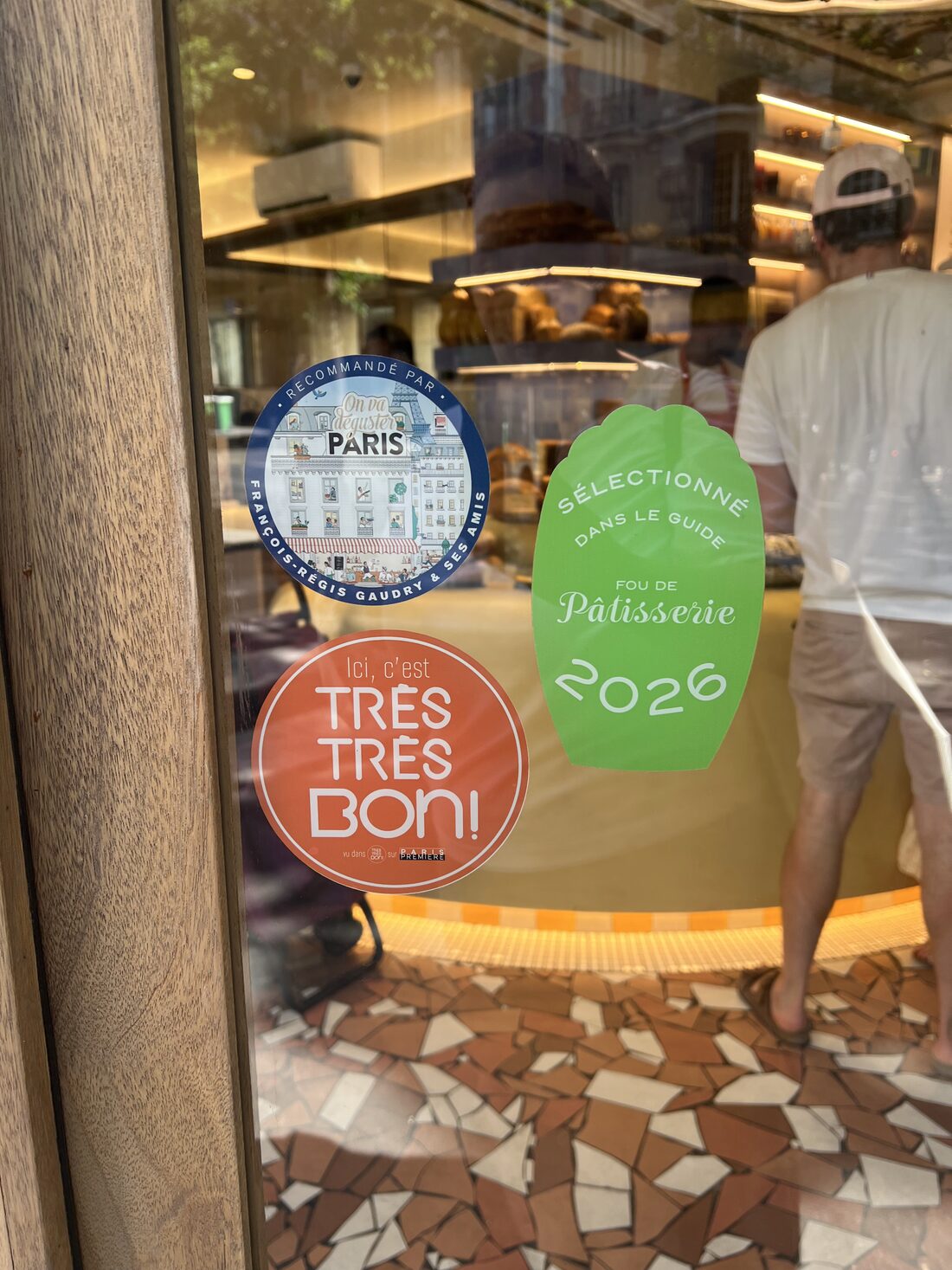
- Fou de Pâtisserie. The pastry world's own magazine and guide — a selection here is a good sign for the sweet counter, not just the bread.
- « Très Très Bon ! » A round orange or green sticker from the French TV show of the same name on Paris Première (hosted by food critic François-Régis Gaudry). A panel of judges — a chef, a sommelier, a market and a street-food specialist — reviews and rates Paris restaurants, wine cellars, chocolate shops and bakeries, so the sticker means this shop passed their tasting. The related « On va déguster Paris » badge comes from the same world.
One honest caveat: awards are a shortcut, not a guarantee, and plenty of wonderful neighbourhood bakeries have no stickers at all. But if you're choosing quickly with a tired child in tow, these tilt the odds firmly in your favour.
What to look at in ten seconds
No sign? Read the shop instead:
- A queue of locals — especially around 8am or just before lunch — beats any review.
- You can see the work — flour, ovens, an open fournil at the back rather than a tidy shop with no kitchen in sight.
- Irregular, golden viennoiserie. Croissants that look slightly different from one another are usually hand-rolled; identical, glossy, too-perfect ones are often factory-made.
- The baguette has an open, uneven crumb and a crackly crust — not a uniform, cottony inside.
Make it the day's treat, not a pit stop
The bakery is one of the easiest resets in Paris — a still, happy pause built around something delicious. Use it on purpose. Mid-afternoon is the French goûter, the four-o'clock snack, and it lands exactly when a child's energy dips. Let them choose their own thing from the counter — the choosing is half the magic, and a little agency heads off a meltdown. Then hand them the warm baguette to carry, and let them tear the end off on the walk; it's what Parisian children do, and it turns a transfer between stops into the nicest part of it.
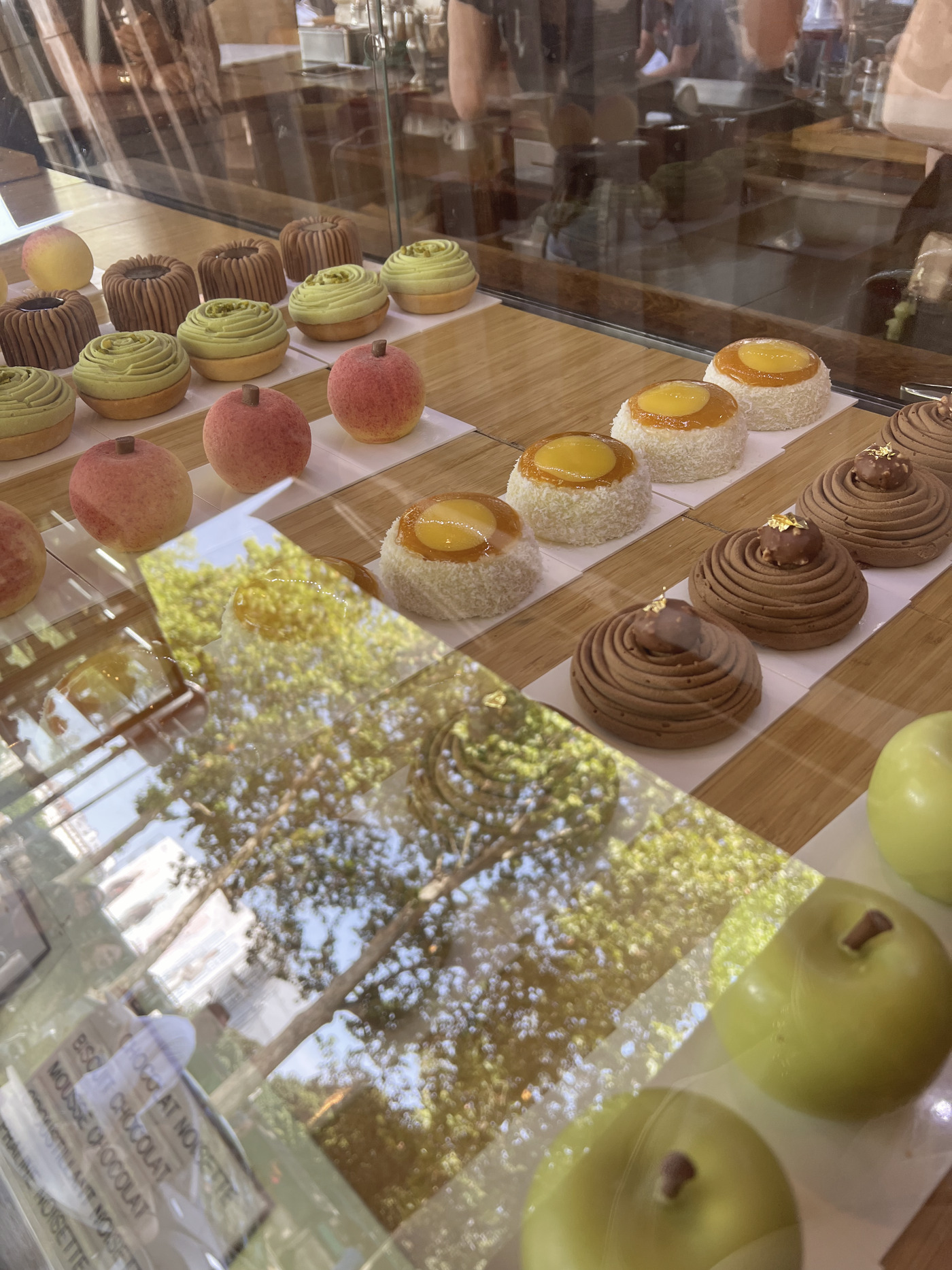
And turn the window into a little mission: find the award sticker, count how many kinds of baguette there are, pick the prettiest tart in the case. Looking becomes a game, the game becomes the memory.
Keep exploring
A good bakery slots into almost any day — pair it with a morning in the Jardin du Luxembourg, a Marais story walk, or the food-timing in our three-day plan.
Want the whole day done for you?
The right bakery, timed to the goûter, slotted into a day that actually works — that's what we make. Start with our free sample, The Sailboat & Left Bank Day, to see one in full.
See the free sample day