The hard part of a Paris museum with children isn't the meltdown — it's the research before it. Which museum suits a five-year-old? Which one closes today? Where do you go when interest runs out after one room? Most "best museums for kids" lists answer none of that; they just hand you fifteen names.
So here's a shorter, vetted version: a few museums chosen by the kind of child, with the working facts attached — and a note on the famous ones.
Why that one idea changes everything
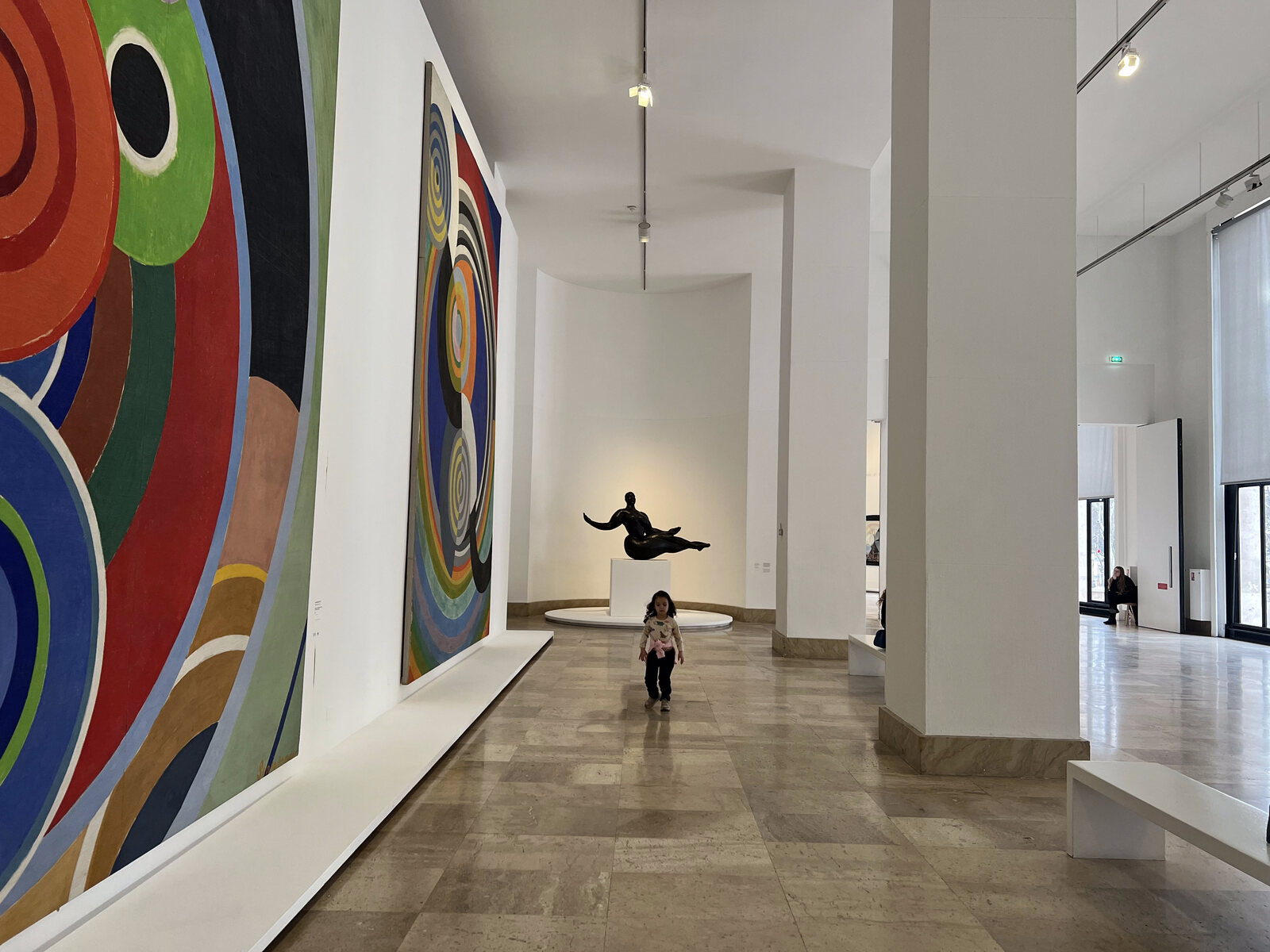
Ask a child what they remember from a museum and they won't list rooms. They'll name one object: the painting with the dog, the staircase that echoed, the statue missing an arm. So you don't need the biggest museum — you need the right one, kept to one room and one hour, with a clear next move when attention runs out.
A few we'd actually send you to
First museum ever, or an under-6 → Musée de la Chasse et de la Nature (62 rue des Archives, Marais; métro Rambuteau, M11). Small, strange, full of animals at child height — more like exploring a curious mansion than enduring a gallery. Under-18s free; a children's discovery activity runs most Wednesdays. chassenature.org
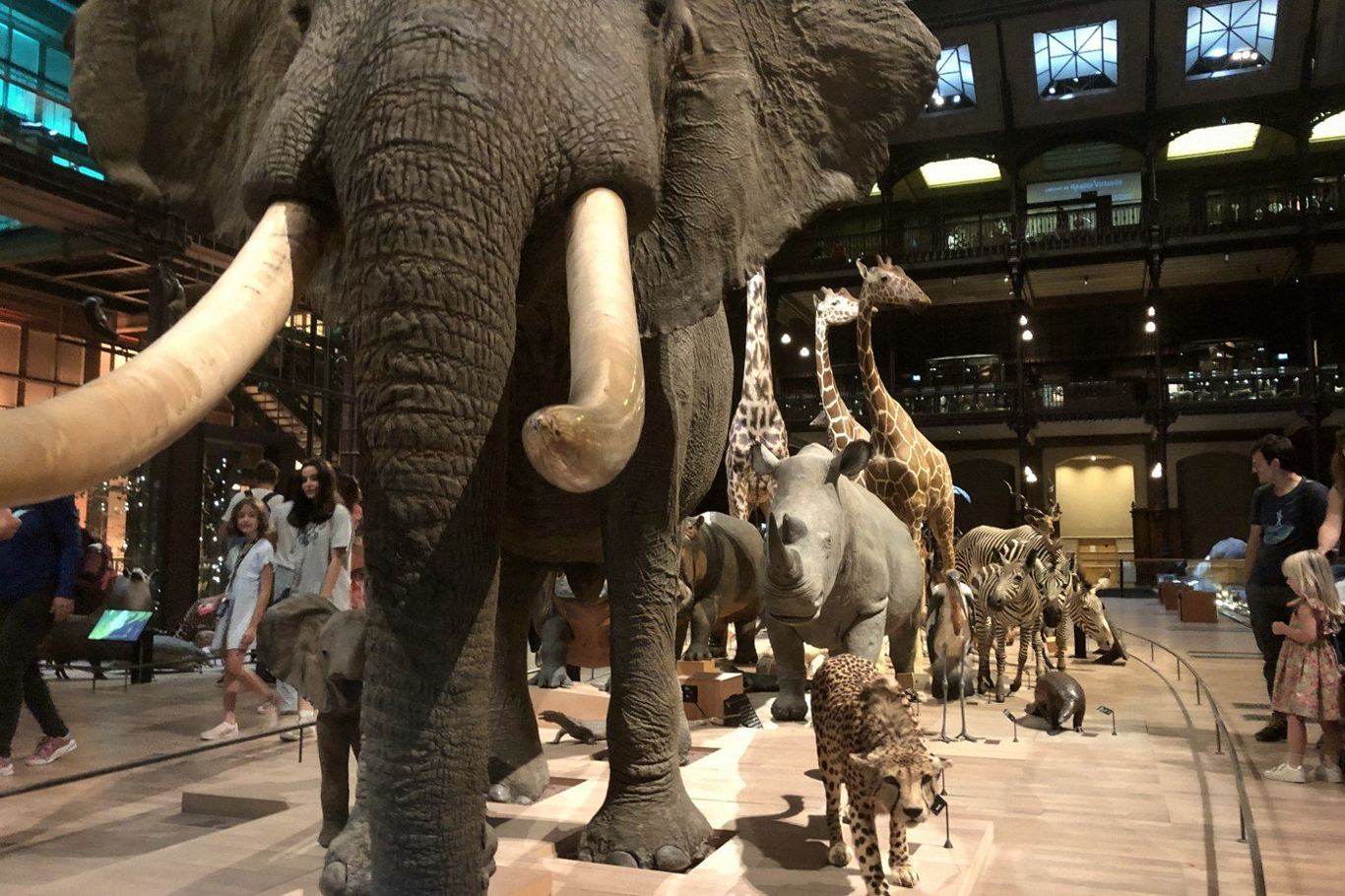
A whole-family adventure, from age one → Grande Galerie de l'Évolution, Jardin des Plantes (5th; métro Censier-Daubenton, M7, or Gare d'Austerlitz). A soaring hall of taxidermy animals marching in procession — genuinely awe-inducing, and it works from about age one: even toddlers are mesmerised by the elephant and the great whale overhead. You decompress in the gardens (and the little ménagerie zoo) right outside. There's also a separate hands-on Galerie des Enfants for ages 6–12. jardindesplantesdeparis.fr
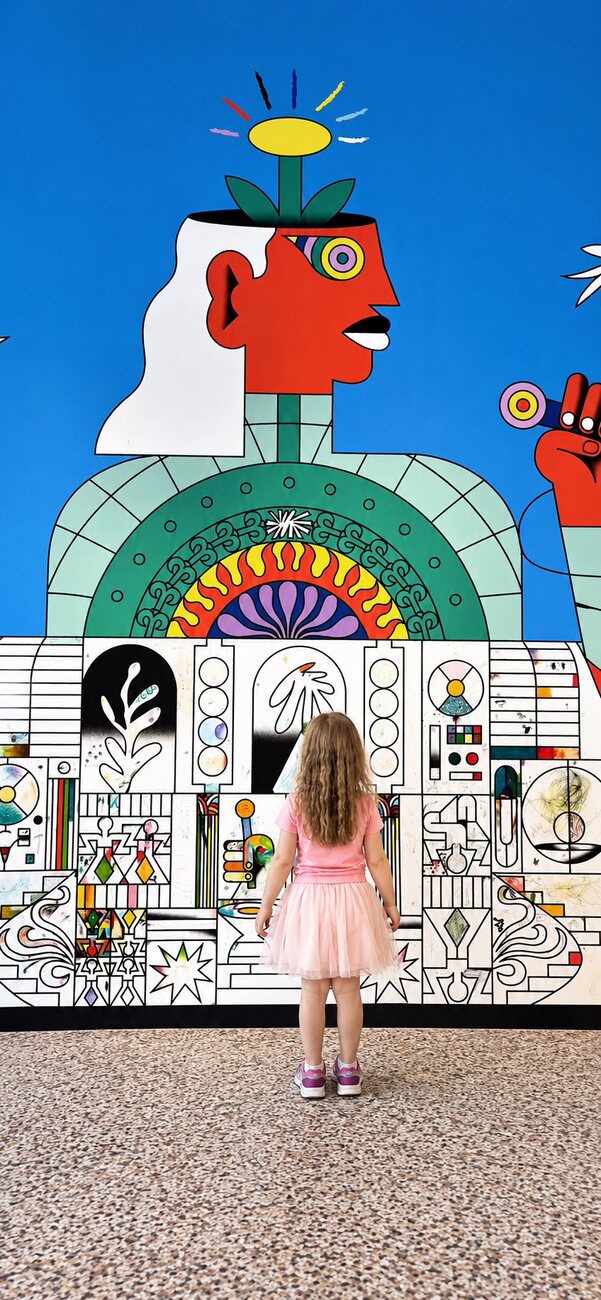
For ages 2–10 → the Grand Palais, Le Palais des Enfants. Under the great glass dome, the Grand Palais has opened a children's space, and its first exhibition — Transparency (ages 2–10, about an hour) — is a playful, hands-on world of light and reflection, the opposite of a hush-and-don't-touch gallery. And the great glass dome overhead is the photo — the one for mum and dad. The programme changes, so check what's on and book ahead. There's also the Salon Seine — a 900 m² activity space for families, free for children, if you just want somewhere bright to land and play. grandpalais.fr
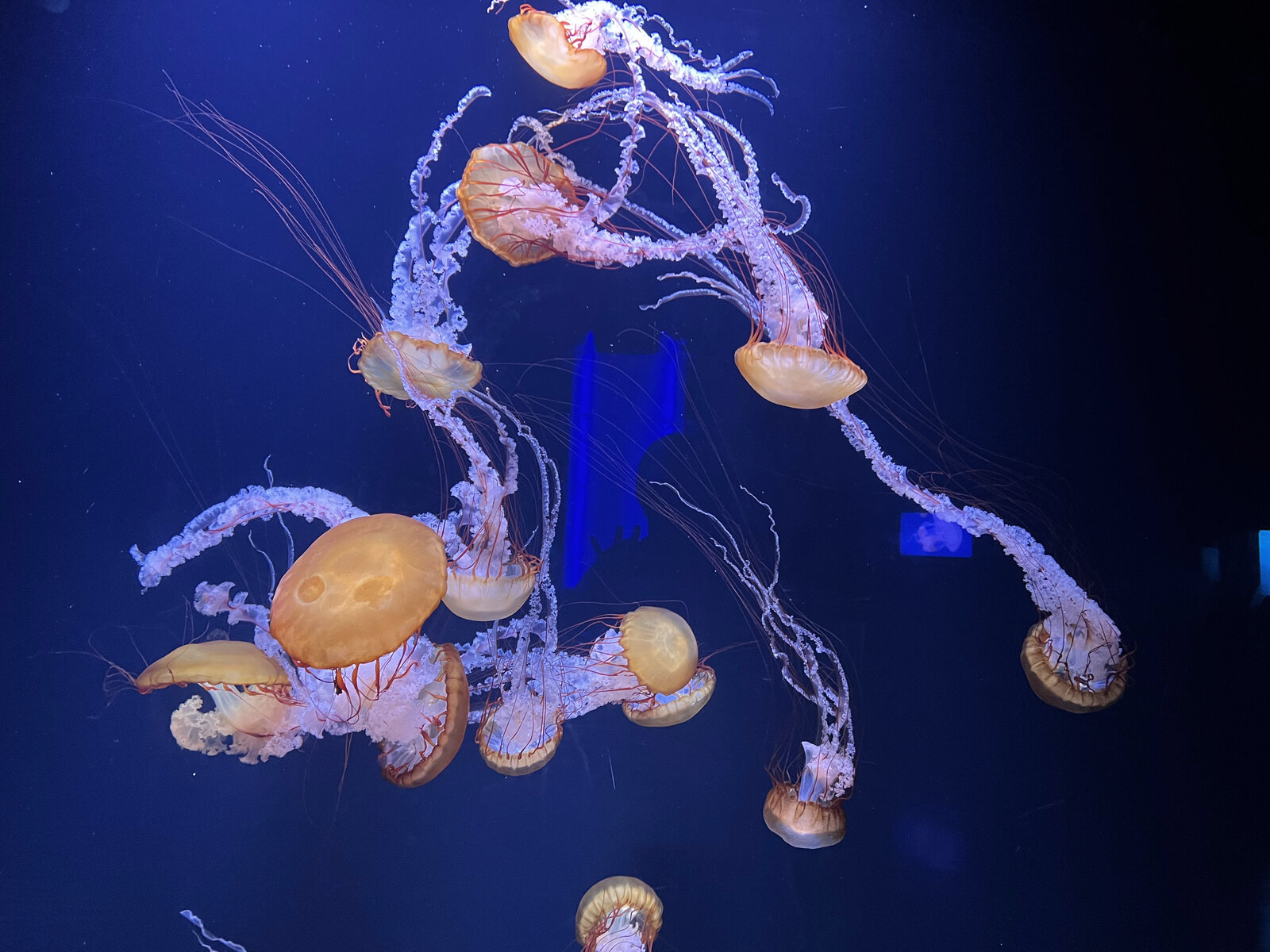
Sea life under cover → the Aquarium de Paris (Cinéaqua) (Trocadéro gardens, 16th; métro Trocadéro, M6/M9). Tanks of sharks and Europe's largest jellyfish collection, plus a children's programme — calm, covered, and quietly mesmerising on a grey day. aquariumdeparis.com
A one-hour classic → Musée de l'Orangerie (Tuileries; métro Concorde). Monet's Water Lilies wrapped around two oval rooms, a small children's section, and the Tuileries garden outside for afterwards — a contained, genuinely beautiful hour. Small visit, big impact. Open Mondays (closed Tuesdays), so it rescues the day when most museums are shut. Under-18s free. musee-orangerie.fr
One of our favourites, for the grown-ups → Bourse de Commerce – Pinault Collection (2 rue de Viarmes, 1st; métro Louvre–Rivoli or Les Halles). A beautifully restored rotunda of contemporary art that's a real treat for mum and dad — and small enough not to overwhelm a child: a quick, high-impact visit rather than a marathon. There's a children's play space (the Mini Salon) and free activity booklets for ages 6–12. Under-18s free; open daily 11–7, closed Tuesdays. pinaultcollection.com
Sculpture in a garden → the Musée Rodin (77 rue de Varenne, 7th; métro Varenne, M13). The galleries inside aren't the easiest with little ones — but the magic here is outdoors: a three-hectare French garden where children can hunt down The Thinker and dozens of bronzes among the roses and gravel paths. Room to roam (with a fair bit of walking on the grounds). In season — roughly April to September — there's also the free Atelier Rodin, a hands-on children's space with a corner for babies and toddlers and activities up to about twelve. Under-18s free; a garden-only ticket is just a few euros. Open Tuesday–Sunday, closed Mondays. musee-rodin.fr
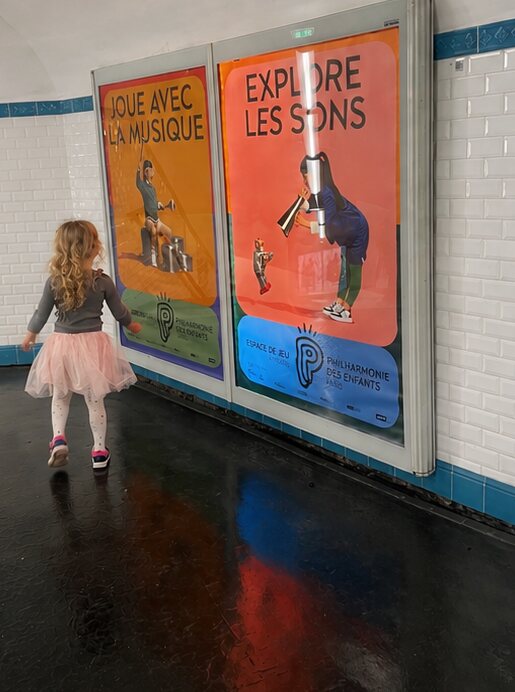
Music-lovers, and a calendar worth checking → the Philharmonie de Paris (Parc de la Villette, 19th; métro Porte de Pantin, M5). Alongside its Musée de la musique — a hall of instruments to discover — it runs a packed calendar of concerts, workshops and hands-on activities for young children, with a dedicated space aimed at roughly ages 4–10. The programme changes constantly, so open the calendar and plan around what's on. philharmoniedeparis.fr
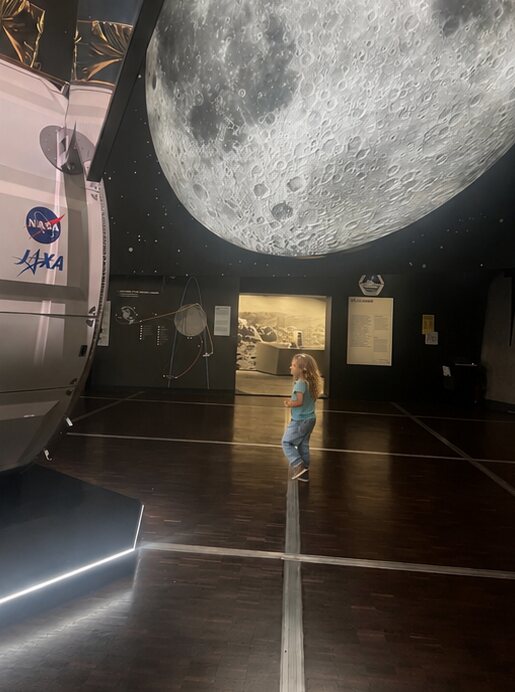
A whole family day → the Cité des Sciences et de l'Industrie (Parc de la Villette, 19th; métro Porte de la Villette, M7). Genuinely something for everyone, and easily a full day. The standard exhibitions ticket already includes a lot: the Planétarium (you can "go to space" — grab a session voucher when you arrive, they sell out), the Argonaute, a real submarine you walk right through, the free aquarium, and Les Serres — soaring indoor greenhouse gardens. Then add one Cité des Enfants session — a separate, timed ticket (~90 min) in two age zones, roughly 2–6 and 5–12 — for the hands-on part children love most: the water play (« les jeux d'eau »), the building site, the TV studio. Temporary exhibitions change often and cost extra, but the standard ticket plus one Cité des Enfants session is a whole day on its own. Open Tuesday–Sunday (closed Mondays); book the Cité des Enfants session ahead. cite-sciences.fr
The big two → go short and targeted, or skip the inside. Honestly, with children under about 7 or 8, I'd skip the inside of the Louvre altogether — you know your own kids, and especially on a short trip (say four days), the courtyard, the glass pyramid and the Tuileries gardens are the lovely, free, no-queue way to "do" the Louvre. Save the galleries for a trip when they're older. A lovely swap five minutes away: the Musée en Herbe (23 rue de l'Arbre-Sec), a tiny children's museum you can do in about an hour — with a big Pokémon exhibition on through summer 2026. If you do go in, the Louvre (métro Palais Royal–Musée du Louvre, M1/M7) and Musée d'Orsay (RER C Musée d'Orsay) work with children only as one-room, one-hour visits with a clear mission — pick three things to find and leave. During school holidays, Orsay opens a free family activity room. The Louvre also runs a guided family tour for children aged 6+ — about €12 on top of admission — that turns the palace into a story to follow.
How to run the visit (and carry an exit)
A museum is the most demanding kind of stop there is — it asks a child to be still, quiet, and hands-off all at once. So treat it as the one still beat of the day and wrap it in release: somewhere to run before, somewhere to run after. Don't stack it on top of another sit-down thing. That rhythm — still, then release, then reset — is what keeps the day from tipping over.
Right before you go in is the moment for silly shakes — shake it all out, head to toe, then freeze (one of the little reset games we keep in our back pocket). Thirty seconds of discharging the wiggles on the steps buys you far more calm inside than asking a fizzing child to "settle down" at the ticket desk. If the energy is still high, the walk-like game works the same way — move like a heron, a soldier, a sloth across the courtyard until the fizz is gone.
Prepare lightly — one sentence about what you might see is plenty. Choose the format on purpose: one room explored properly, one trail or treasure hunt, or one booked family workshop. And carry the exit as part of the plan: when interest tips into restlessness, that's the cue to leave, with a bench or snack ready. Leaving with energy to spare is the visit working.
The hardest moment is usually the exit itself — the transition from quiet gallery back to the street. A five-senses pause bridges it: outside the door, ask what they can suddenly hear, smell, and feel now that they're out, and hand over the snack for the taste. It turns a jarring switch into a small game. (These three — silly shakes, the walk-like game, the five-senses pause — are the little reset kit we lean on all over Paris, not just at museums.)
Prefer to be guided?
For the Louvre especially, a family treasure-hunt tour turns a vast palace into a game. Paris Muse's "Clues" tour and several kid-led scavenger-hunt operators give each child an age-matched booklet and a mystery to solve.
The part that becomes the memory
A few openers families enjoy inside any museum:
- "Which object would you rescue first if this became a story?"
- "Which painting or object looks like it's keeping a secret?"
- "What question did the museum leave you with?"
One small thing to carry home: sketch one object with an imagined speech bubble, or photograph one texture that caught their eye.
Practical tips
- Closed days first. Most Paris museums close Monday or Tuesday: the Louvre, the Orangerie and the Grande Galerie de l'Évolution on Tuesdays; Orsay and the Chasse on Mondays. Build the day around these — the single most common way a museum day is lost. (On a Monday, the Orangerie is your safe bet.)
- Eating nearby. Independent restaurants often close Sunday–Monday or Monday–Tuesday; on those days plan a bakery, a brasserie, or a larger-name spot rather than a small local favourite.
- Timing. Arrive early or near the end; midday and rainy days are busiest.
- Tickets & reservations. Family workshops and some children's areas need booking, occasionally separate tickets (e.g. the Galerie des Enfants).
- Length. For younger children, under an hour is plenty.
- Food. Don't anchor the visit to a museum restaurant. A snack before, a bakery or picnic after.
- Bathrooms & cloakrooms. Locate both on arrival; leave coats and bags so hands are free.
- Strollers. Most Paris museums let you in with a stroller; a few of the busiest ask you to leave it at the cloakroom or use a carrier, so confirm the big ones (the Louvre, Orsay) in advance.
The reason museums feel risky with kids is that the choice — which museum, which day, how long, where to exit, whether to book — is five decisions stacked on top of each other, and getting one wrong (a Monday closure, a 90-minute queue) sinks the rest. Made in advance, in the right order, a museum becomes the easy part of the day.
Keep exploring
A short museum visit slots into a bigger easy day. See how it fits in our other guides — the rainy-day plan, the introduction to Paris with kids, and the three-day itinerary, where culture gets one hour, not a whole afternoon.

Want this done for you?
Prefer the museum stop chosen and timed for you — the right one for your child's age, with an exit already built in? That's part of what we do. Start with our free sample, The Sailboat & Left Bank Day, to see the approach.
See the free Sample Edit